Prof. Prabhat Mittal

Corporate Social Responsibility — Project Consultancy

Working with government bodies, public sector undertakings, CSR foundations and implementing agencies to design community programmes, measure their social impact and report results credibly — including the statistical and analytical work that such studies require.

CSR Activities and Engagement

Needs Assessment & Baseline Studies

Community profiling, baseline surveys and situation analysis to identify where CSR funds will create the greatest social value.

Programme Design

Theory of change, logical frameworks, indicator design and measurement plans aligned with the Sustainable Development Goals.

Monitoring & Mid-Term Review

Monitoring systems, field data collection protocols, dashboards and periodic progress reviews for ongoing interventions.

Impact Assessment

Rigorous impact evaluation using quasi-experimental and longitudinal designs, with statistically defensible estimates of outcomes.

Third-Party Evaluation

Independent evaluation of implemented projects, including beneficiary verification, outcome measurement and reporting.

Student & Community Partnerships

Design of university–community engagement models that connect CSR projects with student volunteers, internships and field research.

Thematic Strengths

  • Education, skilling, employability and digital literacy
  • Environment, sanitation and sustainability campaigns
  • Rural development and livelihoods
  • Women's empowerment and gender inclusion
  • Indigenous communities, food security and nutrition
  • Governance, accountability and public service delivery
  • Health awareness and behaviour change studies
  • SDG alignment, measurement and reporting

Selected Projects, Evaluations and Surveys

2024–25

Project Director — Traditional Food Crops and Minor Grain Crops in Indigenous Communities

Pathways to socio-economic prosperity through sustainable development in the North-East region of India. Sponsored by ICSSR under the Viksit Bharat@2047 special call.

2023–25

Project Director — Student Community Engagement in Swachh Bharat Abhiyan

Environment and sustainability campaigns in higher education institutions. Sponsored by the Indian Council of Social Science Research (ICSSR).

2022

Consultant — Prevalence Study (Statistical Design and Analysis)

For ASK Training and Learning Pvt. Ltd. and International Justice Mission, Chennai.

2020–21

Co-Project Director — Police Accountability, Motivation and Control

Sponsored by the Bureau of Police Research & Development (BPR&D), Government of India.

2019–20

Project Investigator — Impact Assessment of Mukhya Mantri Adarsh Gram Yojana (MMAGY)

Government scheme evaluation in Himachal Pradesh, sponsored by the Himachal Institute of Public Administration (HIPA), Shimla.

2015–16

Co-Investigator — Participation of Women in MGNREGA

A study of selected districts of Himachal Pradesh, sponsored by the University of Delhi.

2011–12

Co-Investigator — Emerging Gram Panchayat Leadership in Rajasthan

A comparative study of Banswara (ST), Ganganagar (SC) and Alwar (General) districts, sponsored by the University of Delhi.

National Surveys

Statistical Analyst — Consumer Unity & Trust Society (CUTS)

National survey on a consumer-friendly cable TV system, sponsored by the Ministry of Consumer Affairs; and the national survey on rational use of drugs, sponsored by the World Health Organization.

Statistical and Analytical Support

Sponsored studies and CSR assignments carry their own analytical demands. The following methods form part of the project work described above, and are also available as a separate component of a government-sponsored or CSR-funded study.

Research Design & Sampling

Study design, sample size determination, sampling plans for large field surveys and selection of the appropriate statistical tests.

Instrument & Scale Validation

Questionnaire design, pilot testing, reliability and validity assessment, exploratory and confirmatory factor analysis.

Survey & Field Data Analytics

Data cleaning, weighting, descriptive and inferential analysis, regression and categorical models, with clearly written interpretation.

Impact Evaluation

Quasi-experimental designs, difference-in-differences, propensity score matching and longitudinal analysis for programme evaluation.

Structural Equation Modelling

Covariance-based and PLS-SEM, mediation and moderation analysis, multi-group comparison and model fit diagnostics.

Bibliometric & Systematic Reviews

Scopus and Web of Science data retrieval, co-occurrence and co-citation mapping, and PRISMA-based systematic review support.

Mixed Methods Approach

Numbers alone rarely explain why a community programme works. Survey and administrative data are combined with focus group discussions, key informant interviews, field observation and case accounts, so that measured outcomes are read alongside the experience of participants. Qualitative findings are coded and triangulated against the quantitative results, and both are reported together — sequential designs where a survey follows fieldwork, or parallel designs where the two run side by side and are compared at the analysis stage.

Statistical packagesSPSS, AMOS, SmartPLS, EViews, Minitab, STATA, SAS Enterprise
ProgrammingR, Python, Base SAS
Data handling & reportingMS-Excel, Mendeley, LaTeX
Earlier analytical assignments include national surveys for the Consumer Unity & Trust Society on behalf of the Ministry of Consumer Affairs and the World Health Organization, the impact assessment of a state government scheme for the Himachal Institute of Public Administration, and a study for the Bureau of Police Research & Development.

Assignments are accepted from government departments and undertakings, public institutions, sponsoring research councils, CSR foundations and their implementing partners, with the approvals required of a serving faculty member of the University of Delhi. Analysis is reported as it is found, and authorship or acknowledgement is agreed in advance.

Research Behind the Practice
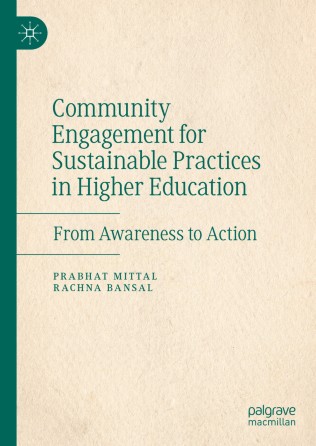
Cover of Community Engagement for Sustainable Practices in Higher Education: From Awareness to Action

Community Engagement for Sustainable Practices in Higher Education

From Awareness to Action — Prabhat Mittal & Rachna Bansal. Springer (Palgrave Macmillan), 2024, 279 pages.

The book sets out how universities, students and communities build sustainable practices together: partnership models, campus-to-community campaigns, measurement of outcomes, and the barriers to scaling. It is the framework behind the CSR assignments described on this page.

View on Springer →

CSR assignments also draw on the following published research:

See all publications →

Discuss a CSR Assignment

Government departments and undertakings, public institutions, CSR foundations and implementing partners are welcome to write with a brief outline of the project, its location, the communities involved and the kind of study or analysis required. An approach note and work plan can then be prepared.

✉ p.mittal@satyawatie.du.ac.in