About the Book
This volume brings together conceptual frameworks, empirical studies, and field-tested case accounts that position students as innovators, change agents, and co-creators of sustainable solutions at local and global scales. While existing literature has largely examined service-learning and sustainability education as distinct areas, relatively few studies provide a consolidated perspective on how university outreach, experiential learning, and SDG-oriented innovation intersect. This edited volume, drawing on invited contributors from diverse regions and institutional contexts, seeks to address this gap.
The volume moves from the conceptual and pedagogical foundations of university community partnerships to campus living laboratories, human empowerment, climate resilience, and the scaling of student-led innovation. By combining theoretical perspectives with global case studies and an inclusive-growth lens for evaluating impact, the book aims to provide a balanced account of both successful and challenging experiences, including issues of power asymmetries, technological solutionism, institutional constraints, and barriers to scaling. It further seeks to develop a global framework for accountable and reciprocal university–community engagement in support of the 2030 Agenda and the Sustainable Development Goals.
Table of Contents
Part I: Foundations
- Preface
- University Outreach and the SDGs: A Global Framework
- Service-Learning as a Catalyst for SDG Awareness
- Evaluating Impact: An Inclusive Growth Framework for University–Community Engagement
Part II: Campus as Living Laboratory
- Open and Green Spaces in Educational Institutions for Emotional and Physical Wellbeing
- Digital Technology and Social Responsibility: Promise, Pitfalls and the Limits of Solutionism
Part III: Empowering People
- University Engagement in Rural Youth Empowerment
- Digital Literacy Missions: Student Mentorship Models for Reducing Inequalities
- Promoting Gender Equality through University Outreach
- University-Enabled Social Entrepreneurship
Part IV: Environmental Sustainability and Resource Management
- Student Co-Creation of Low-Cost WASH Solutions
- Campus-to-Community Renewable Energy Pilots
- Sustainable Agriculture Interventions by Student Innovators
- Youth-Driven Circular Economy Models for Community Waste Reduction
- Community Mapping and Citizen Science for Environmental Monitoring
Part V: Climate Resilience and Community Preparedness
- Student-Led Climate Action Initiatives
- Building Resilient Communities Through Disaster Preparedness
Part VI: Scaling Innovation and Future Directions
- SDG-Driven Innovation in Computing Education: A Global Analysis
- Conclusion – Toward a Global Framework for Student-Led SDG Innovation
Invited Contributions
We welcome empirical case studies, comparative analyses, conceptual papers, evaluation studies and reflective practitioner accounts. Contributions from faculty, researchers, students, community partners and policy practitioners are encouraged, and chapters that critically examine failure, scaling barriers or unintended consequences are particularly welcome. Preference will be given to contributions involving international co-authorship and collaboration across institutions and geographical regions.
The published book will be submitted to SCOPUS for indexing. No Publication Fee involved.
Important Dates
| Schedule | Deadline |
|---|---|
| Extended Abstract Submission (up to 1500 words) | October 15, 2026 |
| Full Chapter Submission | December 01, 2026 |
| Review Results | January 15, 2027 |
| Final Versions Submission | February 15, 2027 |
| Final Acceptance Notification | March 10, 2027 |
For any queries: academicresearchguide21@gmail.com
Submission Guidelines
- Font and Size: Times New Roman, 12-point font
- Line Spacing: 1.5
- Referencing Style: APA 7th Edition
- Table captions should be placed above the respective tables.
- Figure captions should be placed below the respective figures.
- Chapter Abstract (in the full chapter): Maximum 250 words
- Word Limit: Maximum 6000 words
- Chapters should be free from grammatical and typographical errors, and should be carefully proofread before submission.
- At least 70% of the cited references should be from the most recent five years.
- All in-text citations must be accurately cross-checked against the reference list.
All submissions will undergo double-blind peer review. Chapters must be original, unpublished and not under consideration elsewhere. Similarity index should be below 10% and AI-generated content below 20%.
Book Editors
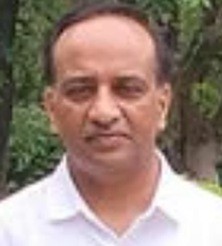
Prof. Prabhat Mittal, Ph.D.
Satyawati College (Evening), University of Delhi, India
ORCiD: 0000-0001-5352-7955
Scopus Id: 12782839900
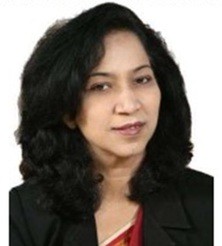
Prof. Kamakshi Mehta, Ph.D., CA
Manipal University Jaipur, Rajasthan, India
ORCiD: 0000-0002-3709-2338
Scopus Id: 57457991600
Extended Abstract Submission
If you are interested in submitting your valuable work, please submit an extended abstract of up to 1500 words through the form below by October 15, 2026.
For any queries: academicresearchguide21@gmail.com
Suggested Readings and References
The following works by the editors may serve as useful background reading on the themes of this volume. They are offered for orientation only; citing them is not a requirement for acceptance.
Community Engagement and Higher Education
- Mittal, P., & Bansal, R. (2024). Community engagement for sustainable practices in higher education: From awareness to action. Springer Nature Switzerland. https://doi.org/10.1007/978-3-031-63981-4
- Mittal, P., & Mehta, K. (2026). Community participation in digital libraries for sustainable transdisciplinary higher education. Discover Education, 5(1), Article 812. https://doi.org/10.1007/s44217-026-01757-7
- Mittal, P., & Jora, R. B. (2023). Exploring student community engagement in higher education: A bibliometric analysis on the path to sustainable development. International Journal of Experimental Research and Review, 32, 166–177. https://doi.org/10.52756/ijerr.2023.v32.014
- Mittal, P., & Jora, R. B. (2025). Learning out of the ground: Incorporating indigenous knowledge with student-led community engagement initiatives. In Indigenous knowledge, decolonial turn & social development in the Global South (pp. 216–223). QTanalytics India. https://doi.org/10.48001/978-81-988770-1-7-23
- Mittal, P., Chakraborty, P., Srivastava, M., & Garg, S. (2021). The role of learning analytics in higher education: A strategy towards sustainability. In 2021 International Conference on Computational Performance Evaluation (ComPE) (pp. 614–618). IEEE. https://doi.org/10.1109/ComPE53109.2021.9752233
- Mittal, P., & Raghuvaran, S. (2021). Entrepreneurship education and employability skills: The mediating role of e-learning courses. Entrepreneurship Education, 4(2), 153–167. https://doi.org/10.1007/s41959-021-00048-6
Gender Equality, Inclusion and Empowerment
- Bansal, R., Sood, B., & Mittal, P. (Eds.). (2024). Gender perspectives in public policy and development. QTanalytics India. https://doi.org/10.48001/978-81-966500-4-9
- Mehta, K., & Solanki, U. (2024). Empowering women through FinTech: Bridging the gender gap in financial inclusion. In Sustainability in digital transformation era: Driving innovative & growth (pp. 246–249). CRC Press. https://doi.org/10.1201/9781003534136-39
- Jain, R., Kaur, B., & Mehta, K. (2022). Exploring pathways of digital financial inclusion to improve women’s economic participation. In 2022 8th International Conference on Advanced Computing and Communication Systems (ICACCS) (pp. 1550–1553). IEEE. https://doi.org/10.1109/ICACCS54159.2022.9785138
- Jora, R. B., Sodhi, K. K., Mittal, P., & Saxena, P. (2022). Role of artificial intelligence (AI) in meeting diversity, equality and inclusion (DEI) goals. In 2022 8th International Conference on Advanced Computing and Communication Systems (ICACCS) (pp. 1687–1690). IEEE. https://doi.org/10.1109/ICACCS54159.2022.9785266
- Batra, B., Sannegadu, R., & Mehta, K. (2022). Gender diversity on the board and corporate social responsibility disclosure in the digitalisation era. In Gender perspectives on Industry 4.0 and the impact of technology on mainstreaming female employment (pp. 174–197). IGI Global. https://doi.org/10.4018/978-1-7998-8594-8.ch009
Sustainable Communities and Development
- Salman, M., Mazhar, S. S., Khan, F. S., & Mittal, P. (2024). A comparative analysis of socio-economic development in communities near special economic zones: A global and Indian perspective. International Journal of Experimental Research and Review, 41(Spl Vol), 146–157. https://doi.org/10.52756/ijerr.2024.v41spl.012
- Mittal, P., & Mehta, K. (2025). Assessing the causal impact of sustainable supply chain practices on SME performance: A quasi-experimental longitudinal analysis. International Journal of Experimental Research and Review, 49, 148–154. https://doi.org/10.52756/ijerr.2025.v49.013
- Jatoliya, D., Pal, S., Mehta, K., & Ranjana, J. (2024). Sustainable supply chain management for environmental and public wellbeing: A comprehensive review and future perspectives. South Eastern European Journal of Public Health, 2688–2703. https://doi.org/10.70135/seejph.vi.2509
- Mehta, K., Solanki, U., Shukla, V. K., & Batra, B. (2025). Industry 5.0 and Society 5.0 – An intertwined human-centric approach. In Industry 5.0 (pp. 105–112). De Gruyter. https://doi.org/10.1515/9783110736168-007
- Kumawat, S., Mehta, K., & Datta, A. (2026). Visualizing the trends of green banking services and environmental performance. Discover Global Society, 4(1), Article 226. https://doi.org/10.1007/s44282-026-00552-x